Showing posts with label science technology. Show all posts

6/15/13

New lightweight lift cable will let buildings soar ever upward


June 15th 2013
The Economist

WHEN Elisha Otis stood on a platform at the 1854 World Fair in New York and ordered an axeman to cut the rope used to hoist him aloft, he changed cityscapes for ever. To the amazement of the crowd his new safety lift dropped only a few inches before being held by an automatic braking system. This gave people the confidence to use what Americans insist on calling elevators. That confidence allowed buildings to rise higher and higher.

They could soon go higher still, as a result of another breakthrough in lift technology. This week Kone, a Finnish liftmaker, announced that after a decade of development at its laboratory in Lohja, which sits above a 333-metre-deep mineshaft which the firm uses as a test bed, it has devised a system that should be able to raise an elevator a kilometre (3,300 feet) or more. This is twice as far as the things can go at present. Since the effectiveness of lifts is one of the main constraints on the height of buildings, Kone’s technology—which replaces the steel cables from which lift cars are currently suspended with ones made of carbon fibres—could result in buildings truly worthy of the name “skyscraper”.

Story continues here: economist.com

Related stories . . . 

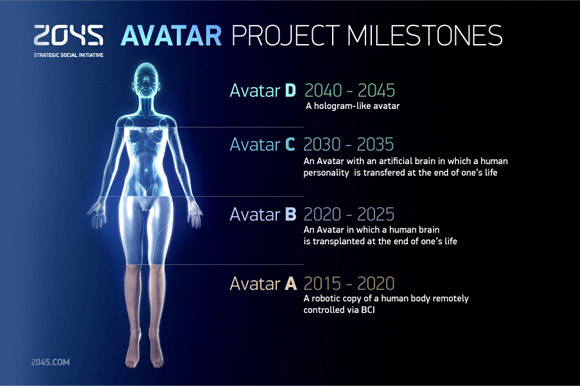
Immortality by 2035? (VIDEO)

Immortality by 2035? (VIDEO)


Bob Pisani
Image source: 2045.com

How's this for a weekend conference: Some of the smartest people in the world are gathering in New York to try to figure out how to build lifelike copies of humans ... to be eventually uploaded with the contents of a real human brain.

It's the brainchild of a Russian multimillionaire, Dmitry Itskov. ... And he says he's perfectly serious, and that it could be accomplished by 2035.


Crazy? The New York Times gave Itskov a front-page profile on its Sunday Business page a week and a half ago.

Story continues here: cnbc.com

Related stories . . . 

Mysterious Illness Kills 8 Cows and Infects other Livestock in Pakistan

Mark Turner
Mysterious World
6/15/2013

On June 10th, a story from Pakistan says that eight cows have died in different areas in the province of Sargodha. A mysterious disease that has killed cows, goats, sheep and buffalo.

Though the details are sketchy, one is left to wonder if this is a case of Mad Cow disease which infects grazer animals?

The local population is upset and claim that no measures are being made by authorities to keep the situation under control. They demand vaccination, but of what type of inoculation would be required is not indicated. The animals are the only source of income for the local inhabitants.

Story source: thefrontierpost.com

Related stories . . . 

2 Dead from Mysterious respiratory disease infects 7 in southeast Alabama

2 political families grieve for daughters who pass on same day

10 Strange Unexplained Events (Video)

6/12/13

Smallest Galaxy Ever Found


Megan Gannon
10 June 2013
Space.com

An ultra-faint collection of 1,000 stars orbiting the Milky Way is the most lightweight galaxy ever discovered, scientists say.

The dwarf galaxy known as Segue 2 is bound together by a tiny clump of dark matter. Scientists who measured it using Hawaii's Keck Observatory say the finding adds support to theories about the formation of the universe.

Models predict that the outskirts of our cosmic neighborhood should be teeming with tiny galaxies, but scientists have found far fewer satellite dwarf galaxies in the Local Group than they expected.

6/6/13

Invisibility 'time cloak' developed


optical camouflage, keio university

Melissa Hogenboom
BBC News

An "invisibility" time cloak which is able to hide events in a continuous stream of light has been developed by scientists.

The cloak works by manipulating the speed of light in optical fibres and means any interaction which takes place during this "hole in time" is not detected.

That is, a beam of light can be manipulated along its path.

The study is published in the journal Nature.

The research builds upon a time cloak described last year that was only able to hide single brief events of time in an optical beam.

Hidden data

This work is different to other "invisibility cloaks" in that it hides events in time, rather than spatial objects - which similar efforts have looked into.

The team from the Purdue University in Indiana has shown it can hide events in the path of a continuous light beam by having several "holes in time".

The researchers were able to cloak nearly half the data put in the beam's path, which they would otherwise be able to detect.

Cloaking, just as it sounds, is where an object or event is hidden from vision. This can apply to frequencies of light or sound. For example, stealth war planes can be difficult to detect on enemy radar.

"We were able to push the light forward and back using commercial telecoms components, that are controlled by electrical signals," said Andrew Weiner, who co-authored the paper.

"When one sends high-speed data over an optical fibre in the existing infrastructure, in many cases it's just 1s and 0s (binary code).

Bendy light

"In our system, we can hide the 1s and 0s. There can also be other kinds of disturbances in the light but this cloak provides a zone where one doesn't see how the light is being changed," Prof Weiner told BBC News.

Story continues here: bbc.co.uk

Related stories . . . 

Unsolved mystery: Location of Flight 2501 that disappeared over Lake Michigan eludes searchers 63 years later

6/4/13

Why You Should Be Scared of Someone Stealing Your Genome


Michael White
June 3, 2013
Pacific Standard

Genome theft is already a possibility, and that problem looks like it’s only going to grow.

Most of us occasionally worry that some online mishap, like a misreading of Facebook’s latest privacy policy, will disclose to the world things we’d rather keep private: pictures unlikely to amuse your employer, rants about your neighbor’s hygiene habits, or harmless-but-personal stuff that you only want to share with close friends. If the threat of losing your online privacy has you worried, future threats to the privacy of your genome should have you absolutely freaked out. By means of your DNA, nature provides you with a security flaw that makes Microsoft Windows look like Fort Knox.

Personal genetic information is currently a subject of intense scientific interest, because one of the major goals of today’s biomedical science is to figure out how we can use information in your DNA to customize your medical care. Your individual genome has a strong influence on how your body responds to efforts to prevent and treat disease, and in the coming years, doctors will begin to routinely use genetic information in patient care. As the practice of genetic medicine becomes increasingly common, more and more of us will use genetic testing services, which means that more and more of us will have our genetic data stored in some sort of database. This will put some very personal information at risk, because, as Visa will tell you, databases can be hacked.

Story continues here: psmag.com

Related stories . . . 

Woolly mammoths could be brought back to life - scientists discover tissue 10,000 years old

Teen who built Nuclear Reactor kicked-out of Science Fair

5/27/13

400-year-old frozen moss brought back to life in scientist’s lab


University of Alberta Professor Catherine La Farge has grown moss 
from a 400-year-old specimen discovered frozen under an Arctic glacier.
Photograph by: Shaughn Butts , Edmonton Journal

SHEILA PRATT
EDMONTON JOURNAL

EDMONTON - In Arctic summers, Catherine La Farge camps out at the toe of the Teardrop glacier on Ellesmere Island in Canada’s North.

The University of Alberta biologist has watched the ice retreat, up to four metres a year now, giving her an unprecedented view of what was entombed under the ice for 400 years — old rocks, mud, and her specialty, ancient moss.

One day, walking along the edge of the ice, La Farge noticed some of the moss had a greenish tinge. That gave her a hunch — could there be life in that old moss after all?

In an amazing experiment, La Farge found the frozen moss was able to revive itself though it had been buried since the Little Ice Age (1550-1850). Her study, published this week in the Proceedings of the National Academy of Science, is shaking up some basic assumptions about land plants.

In the past, when scientists occasionally came across plant material previously frozen under an Arctic glacier, they assumed the plant material was dead. Discoloured and lifeless, it certainly looked like it was.

In 2009, La Farge brought samples back to the lab. On closer examination, she noticed a tiny green stem. There were two possible explanations.

“Either it kept its colour under the glacier or it grew after the moss emerged 400 years later.”

There was only one way to find out.

La Farge ground up the old plant material, put it in petri dishes full of potting soil and set it in the grow chamber next to her office. Then she and graduate student Krista Williams and master’s student David Wilkie watched for signs of life.

It didn’t take long. In about four to six weeks, tiny green filaments or strands called protonema began to grow.

Months later, a dish was almost full of green moss from cells frozen for 400 years. Of 24 samples 
potted, seven produced new growth.

5/25/13

Private Firm Sets Sights on First Moon Base

Robert Bigelow discusses a model of a Bigelow Aerospace lunar outpost. BIGELOW AEROSPACE
IRENE KLOTZ
MAY 24, 2013 11:52 AM ET
Discovery News

NASA may not be going to the moon anytime soon, but private companies plan to do so, a study by space habitat developer Bigelow Aerospace shows.

The study, commissioned by NASA, is intended as a supplemental roadmap for the U.S. government as it charts human space initiatives beyond the International Space Station, a permanently staffed research complex that orbits about 250 miles above Earth.

“Instead of being the typical approach where we put together all the plans and we ask for participation, we wanted to look at it the other way and see what’s available,” NASA’s head of space operations, Bill Gerstenmaier, told reporters during a press conference on Thursday.

“This is a holistic kind of effort,” added Robert Bigelow, president and founder of the Nevada-based firm that bears his name. “It’s intended to encompass as much (information) as possible and it’s intended to evolve and to grow.”

The first part of the study surveyed about two dozen companies and research organizations about their ideas, plans, capabilities, schedules and costs for upcoming space initiatives. A draft report was submitted to NASA on Thursday -- 40 days ahead of schedule -- and has not yet been publicly released.

NASA intends to use the information to figure out where it can collaborate with private space initiatives and where it might, for example, entirely skip an expensive research and development program and just buy services or hardware commercially.

For example, after the International Space Station is removed from orbit, NASA could be a tenant aboard a Bigelow Aerospace-owned habitat for any microgravity research or technology development it wants to do.

Story continues here: news.discovery.com

Related stories . . .

Bigelow Aerospace director addresses FAA UFO reports (VIDEO)

More Evidence That Ancient Mars Could Support Life Found by Old Rover

5/22/13

More Evidence That Ancient Mars Could Support Life Found by Old Rover


NASA's Mars Exploration Rover Opportunity
CREDIT: NASA/JPL-Caltech/Cornell/Arizona State Univ.

Megan Gannon
Space.com

The venerable Mars rover Opportunity, the older and smaller cousin of Curiosity, has discovered another water-weathered rock hinting that the Red Planet could have supported life in its ancient past, NASA officials said.

In its last days exploring "Cape York," a site on the rim of the giant Endeavour crater, the Opportunity rover examined a fractured rock unlike any it has seen during its nine years on Mars, researchers say. 

With data from a camera and spectrometer on the rover's robotic arm, researchers found that the rock, dubbed "Esperance," is a relic of a wetter time on Mars when life may have been possible.


Story continues here: Space.com

Related stories . . .

Star Trek star says NASA is hiding alien evidence


World's First Cloned Human Embryonic Stem Cells


Oregon Health and Science University Photos

Researchers at Oregon Health and Science University have successfully used cloning to create human embryonic stem cells by taking skin cells and fusing them with donated human eggs.

ANDREW POLLACK
New York Times

Scientists have finally succeeded in using cloning to create human embryonic stem cells, a step toward developing replacement tissue to treat diseases but one that might also hasten the day when it will be possible to create cloned babies.
The researchers, at Oregon Health and Science University, took skin cells from a baby with a genetic disease and fused them with donated human eggs to create human embryos that were genetically identical to the 8-month-old. They then extracted stem cells from those embryos.
Story continues here: nytimes.com


Related stories: 

How 'Star Trek' inspired NASA, astronauts and more

Star Trek's Warp Drive May Actually Work (VIDEO)

A Brief History of Awesome Robots

Russian Billionaire Dmitry Itskov Plans on Becoming Immortal by 2045 (VIDEO)

Intelligent Robots Will Overtake Humans by 2100, Experts Say

Huge Rock Crashes Into Moon, Sparks Giant Explosion

'Einstein's Planet': New Alien World Revealed by Relativity

Mystery of Moon's Magnetic Field Deepens

Mars One says 80,000 have applied for one-way mission to red planet (Video)

Plague Helped Bring Down Roman Empire, Graveyard Suggests

Mars One says 80,000 have applied for one-way mission to red planet (Video)

5/21/13

Hypersonic Weapons Could Hit Battlefield by 2025


Mike Wall
SPACE.com

High-tech weapons may be screaming through the skies at five times the speed of sound by the middle of the next decade, U.S. military officials say.

That's the most optimistic timeline for the battlefied debut of a superfast new strike capability, officials said, and it depends on continued research into hypersonic vehicles like the Air Force's X-51A Waverider, which completed its final test flight earlier this month.

The Air Force is "trying to get the technologies mature enough that in the 2020 timeframe we would like to be able to show the warfighter that we would be ready to start a development program of record sometime around that time," said Charlie Brink, X-51A program manager for the Air Force Research Laboratory Aerospace Systems Directorate.


Story continues here: Space.com

Related stories: 


How 'Star Trek' inspired NASA, astronauts and more

Star Trek's Warp Drive May Actually Work (VIDEO)

A Brief History of Awesome Robots

Russian Billionaire Dmitry Itskov Plans on Becoming Immortal by 2045 (VIDEO)

Intelligent Robots Will Overtake Humans by 2100, Experts Say

Huge Rock Crashes Into Moon, Sparks Giant Explosion

'Einstein's Planet': New Alien World Revealed by Relativity

Mystery of Moon's Magnetic Field Deepens

Mars One says 80,000 have applied for one-way mission to red planet (Video)

Plague Helped Bring Down Roman Empire, Graveyard Suggests

Mars One says 80,000 have applied for one-way mission to red planet (Video)

5/18/13

How 'Star Trek' inspired NASA, astronauts and more

“Star Trek: Into Darkness.” (PARAMOUNT PICTURES)
Miriam Kramer
Space.com

The interstellar voyages of the Starship Enterprise have captured imaginations around the world for decades.

Astronauts, movie makers, scientists, engineers and others from all walks of life cite "Star Trek's" science and technology as an influence on their lives and worldview. But why? What makes "Star Trek" the enduring and thrilling science fiction epic it is today?

The optimistic crew led by Captain Kirk in the original series and Jean-Luc Picard in "Star Trek: The Next Generation" gave a science-minded generation an outlet for expression, Dr. Mae Jemison, one of the astronauts inspired by the show said.

"I saw 'Star Trek' the original series as a little girl and for me it was really great because it talked about and it dealt with situations that were going on at the time, but you saw it with a lens of another place, another time, another world, another group of people,"

Story continues: Fox News

Related stories . . .

Star Trek's Warp Drive May Actually Work (VIDEO)

A Brief History of Awesome Robots

Russian Billionaire Dmitry Itskov Plans on Becoming Immortal by 2045 (VIDEO)

Intelligent Robots Will Overtake Humans by 2100, Experts Say

Huge Rock Crashes Into Moon, Sparks Giant Explosion

Huge Rock Crashes Into Moon, Sparks Giant Explosion

This artist's illustration shows a meteor crashing into the surface of the moon
This artist's illustration shows a meteor crashing into the surface of the moon. Scientists say hundreds of space rocks impact the lunar surface every year.
CREDIT: NASA 
Clara Moskowitz
SPACE.com

The moon has a new hole on its surface thanks to a boulder that slammed into it in March, creating the biggest explosion scientists have seen on the moon since they started monitoring it.

The meteorite crashed on March 17, slamming into the lunar surface at a mind-boggling 56,000 mph (90,000 kph) and creating a new crater 65 feet wide (20 meters). The crash sparked a bright flash of light that would have been visible to anyone looking at the moon at the time with the naked eye, NASA scientists say.

"On March 17, 2013, an object about the size of a small boulder hit the lunar surface in Mare Imbrium," Bill Cooke of NASA's Meteoroid Environment Office said in a statement. "It exploded in a flash nearly 10 times as bright as anything we've ever seen before."

5/15/13

Star Trek's Warp Drive May Actually Work (VIDEO)

Star Trek Into Darkness
Jillian Scharr
Space.com

In the "Star Trek" TV shows and films, the U.S.S. Enterprise's warp engine allows the ship to move faster than light, an ability that is, as Spock would say, "highly illogical."

However, there's a loophole in Einstein's general theory of relativity that could allow a ship to traverse vast distances in less time than it would take light. The trick? It's not the starship that's moving — it's the space around it.

In fact, scientists at NASA are right now working on the first practical field test toward proving the possibility of warp drives and faster-than-light travel. Maybe the warp drive in "Star Trek Into Darkness," the franchise's latest film opening this week, is possible after all.

Story continues: Space.com


Related posts . . . 

A Brief History of Awesome Robots

Russian Billionaire Dmitry Itskov Plans on Becoming Immortal by 2045 (VIDEO)

Intelligent Robots Will Overtake Humans by 2100, Experts Say

5/14/13

'Einstein's Planet': New Alien World Revealed by Relativity

Clara Moskowitz
SPACE.com

This artist's concept shows the huge, scorching-hot "Einstein's planet," formally known as Kepler-76b, orbiting its host star, which has been tidally distorted into a slightfootball shape (exaggerated here for effect). The planet was detected when astronomers spotted brightness changes in the star induced by the planet due to relativistic effects.
CREDIT: David A. Aguilar (CfA) 

Einstein's special relativity has proven more useful than ever, as scientists have now used it to discover an alien planet around another star.

The new-found world — nicknamed "Einstein's planet" by the astronomers who discovered it — is the latest of more than 800 planets known to exist beyond our solar system, and the first to be found through this method.

The planet, officially known as Kepler-76b, is 25 percent larger than Jupiter and weighs about twice as much, putting it in a class known as "hot Jupiters." The world orbits a star located about 2,000 light-years from Earth in the constellation Cygnus.

The researchers capitalized on subtle effects predicted by Albert Einstein's special theory of relativity to find the planet. The first is called the "beaming" effect, and occurs when light from the parent star brightens as its planet tugs it a nudge closer to Earth, and dims as the planet pulls it away. Relativistic effects cause light particles, called photons, to pile up and become focused in the direction of the star's motion.

"This is the first time that this aspect of Einstein's theory of relativity has been used to discover a planet," research team member Tsevi Mazeh of Tel Aviv University in Israel said in a statement.

A Brief History of Awesome Robots

Russian Billionaire Dmitry Itskov Plans on Becoming Immortal by 2045 (VIDEO)

Intelligent Robots Will Overtake Humans by 2100, Experts Say


Man brought back to life after being clinically dead for 40 minutes

Fox News
news.com.au

Colin Fiedler, 39 from Victoria, was one of three cardiac arrest patients brought back to life after being dead for between 40 and 60 minutes at The Alfred hospital in Melbourne, using two new techniques in the emergency department.

The Alfred is testing a mechanical CPR machine, which performs constant chest compressions, and a portable heart-lung machine -- normally used in theatre -- to keep oxygen and blood flowing to the patient's brain and vital organs.

Fiedler had a heart attack and was clinically dead for 40 minutes before being revived last June.

"I'm so grateful, more than I could ever say," he told the Herald Sun.

Story continues: Fox News